Manufacturer · Warranty disputes
Independent inspections that survive the warranty dispute.
When a consumer claim challenges your warranty determination, route the inspection out. NWFA-, IICRC-, CFI-, NALFA-credentialed inspectors document cause, methodology, and chain-of-custody — built for Legal review on the same day.
The contested-warranty moment
When the consumer's contractor disagrees, the in-house memo stops being enough.
A homeowner files a warranty claim. The installer points at the product. The consumer's contractor points at the installation. Your warranty technician reviews the file — and the file now reads like an interested party arguing its own case.
A defensible determination is a third-party inspection on the floor in question, with a cert that maps to the failure mode, methodology disclosed, evidence captured, and chain-of-custody recorded. Without that artifact, the next round is a denial appeal Legal cannot defend on paper alone.
What a warranty inspection answers
Five questions every contested warranty case turns on.
Every warranty dispute reduces to a cause-and-responsibility question. The inspection scope is built around the five classifications a defensible report has to make — clearly, with evidence, before Legal reviews the file.
Alleged installation defect
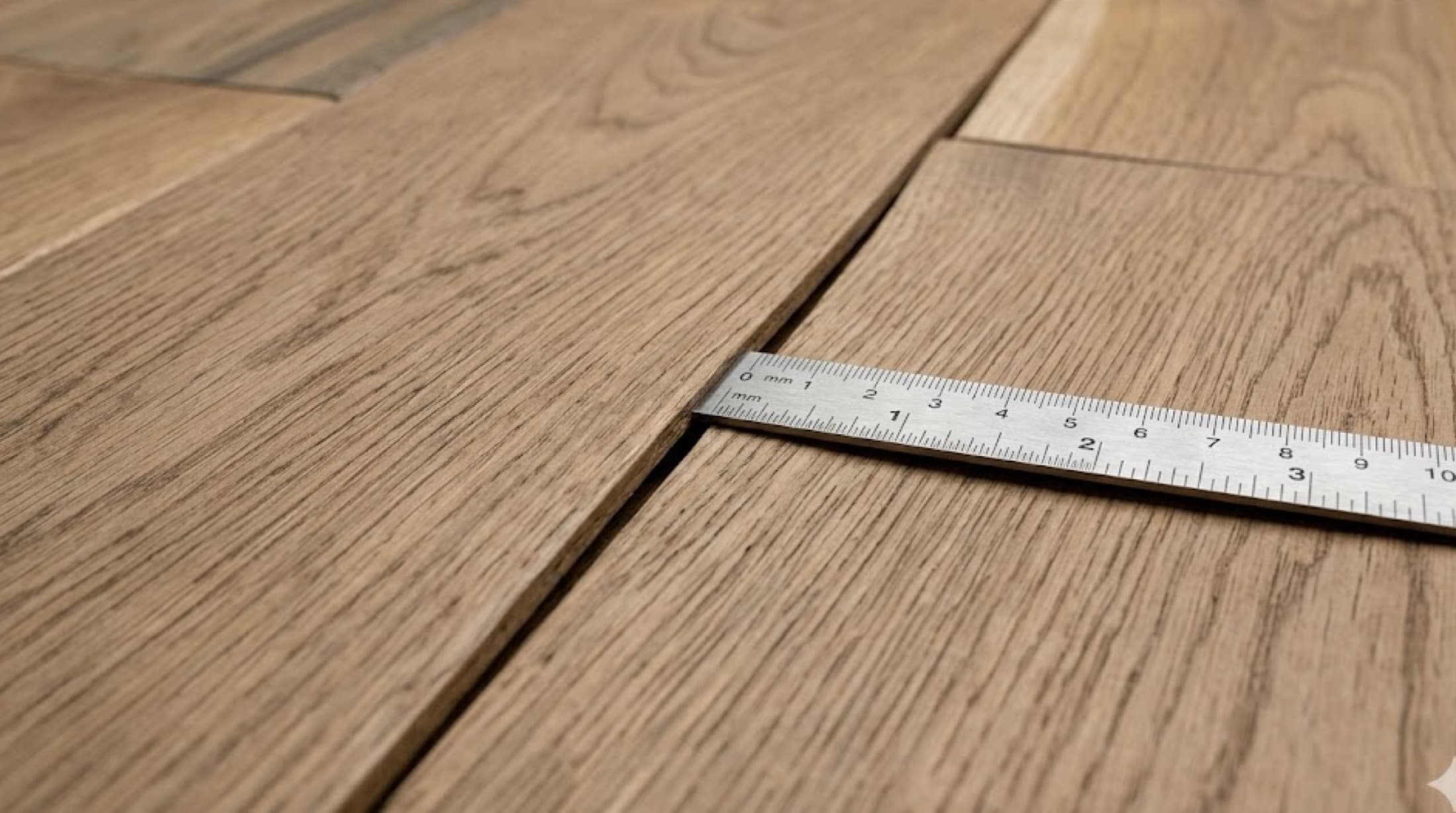
Subfloor preparation, expansion gaps, fastener placement, acclimation timing, and installer-protocol adherence — assessed against manufacturer specification and CFI installation standards. Documented to the exact tolerance the spec sheet calls.
Alleged product defect
Manufacturing-defect indicators evaluated against the product class — finish failure, board separation, edge profile, surface integrity. NWFA for hardwood, NALFA for laminate, IICRC for moisture-driven failure. The cert match is the routing rule, not a best-effort.
Water or maintenance-related failure
Moisture intrusion source, post-installation maintenance behavior, environmental conditions at the time of failure. Distinguishes covered-warranty defects from out-of-scope homeowner conduct using the IICRC moisture inspection protocol.
Alleged sub-floor failure
Subfloor flatness, moisture content, structural integrity, and preparation history reviewed against manufacturer specification. The sub-floor lane is where installer, builder, and product responsibility most often diverge — documented separately so the report can support a clear allocation.
Root-cause classification
Every report closes with a single, certified root-cause classification — installation, product, sub-floor, environmental, or maintenance — with the evidence supporting that finding cited inline. The classification is what Legal cites in the denial or affirmation; everything before it is the supporting record.
The deliverable
A cert-backed, defensible report. Built so Legal can sign off the same day.
The report is a single-PDF artifact that names the certified inspector, discloses the inspection methodology, captions every photograph to a fail-mode taxonomy entry, and binds an explicit chain-of-custody from assignment receipt through delivery. The root-cause classification appears once, on the cover, and every section that follows is the evidence supporting it.
For Legal review, the structure is consistent across product categories — methodology, environmental conditions, photographic evidence, measurement records, interview notes if any, chain-of-custody timestamps, and the certified inspector's NWFA / NALFA / CFI / IICRC credential pertinent to the determination. No two reports look the same on the floor; every report looks the same on the page.
- NWFA / IICRC / CFI / NALFA cert match named on the cover
- Photographic evidence captioned to fail-mode taxonomy
- Chain-of-custody timestamps recorded as a section, not an appendix
- Single root-cause classification — installation, product, sub-floor, environmental, or maintenance
The engagement flow
Four steps. Defensible report on the same day Legal needs it.
Step 1: Open the assignment
A warranty manager or consumer-affairs lead opens the assignment with the failure mode noted, product class identified, and the consumer / installer contact attached. The form is the integration — no IT lift required.
Step 2: Cert-matched dispatch
The assignment routes to an inspector whose certification maps to the failure mode and product class. Inspector identity and target SLA window are confirmed before the assignment is accepted on our end.
Step 3: On-site inspection with chain-of-custody
The inspector arrives, captures evidence against the fail-mode taxonomy, interviews the consumer or installer when relevant, and binds the chain-of-custody record from arrival through departure. No coaching to a denial outcome — the inspection is the inspection.
Step 4: Defensible report delivered
The report lands in the platform with the root-cause classification on the cover, the supporting evidence inline, and the certified inspector named. Legal reviews it the same day; if the denial is appealed, the original inspector's notes route to Legal as supplementary documentation.
Cert match by failure mode
The credential names which failure mode the inspector is qualified to call.
Forensic engineers hold a PE license; a flooring warranty turns on trade-installation expertise. We dispatch the credential that matches the product on the floor.
- NWFAHardwood — water damage, finish failure, board separation
- NALFALaminate — delamination, edge swelling, surface wear
- CFIInstallation — subfloor prep, expansion gaps, fastener placement
- IICRCMoisture and finishing — environmental and post-install conditions
Warranty questions, answered
Four questions warranty managers and Legal teams ask first.
The questions we hear most across manufacturer warranty programs. Where a sourced number would strengthen the answer, the source is noted internally and the answer is qualitative until it lands — never invented.
Every inspection records assignment receipt, inspector arrival timestamp, evidence captured (each photograph captioned to a fail-mode taxonomy entry), measurement records, consumer or installer interviews when conducted, and the report delivery timestamp — all bound to the same assignment record in the reporting platform. The chain-of-custody section is part of the report itself, not a separate appendix that has to be requested.
Inspectors in our network may be available for deposition or expert-witness engagements where their original inspection is the artifact in question — coordinated case-by-case. Specific expert-witness experience by inspector and product category is not published publicly; manufacturer Legal teams running diligence on this question can request the relevant inspector's qualifications through the contact route.
Assignments route by failure mode and product class: NWFA for hardwood (water damage, finish failure, board separation), NALFA for laminate (delamination, edge swelling, surface wear), CFI for installation defects across categories (subfloor prep, expansion gaps, fastener placement), IICRC for moisture and finishing inspections. The cert match is a routing rule — wrong-cert inspections are escalated, not delivered.
Specific dispute-outcome statistics by product category are reviewed during onboarding rather than published publicly — outcomes belong to the manufacturer, and aggregating them in marketing copy without permission is the wrong move. We are happy to walk through the data we have under NDA when a manufacturer is evaluating the vendor relationship.
Open a warranty assignment
One vendor. Cert matched to the failure mode. A report Legal can sign off.
When the next contested warranty case lands, the inspection vendor relationship starts the same way — open an assignment, or read a redacted sample first. Procurement and Legal diligence is already on the page; nothing about the vendor evaluation has to wait for the first sales call.