Solid and engineered hardwood
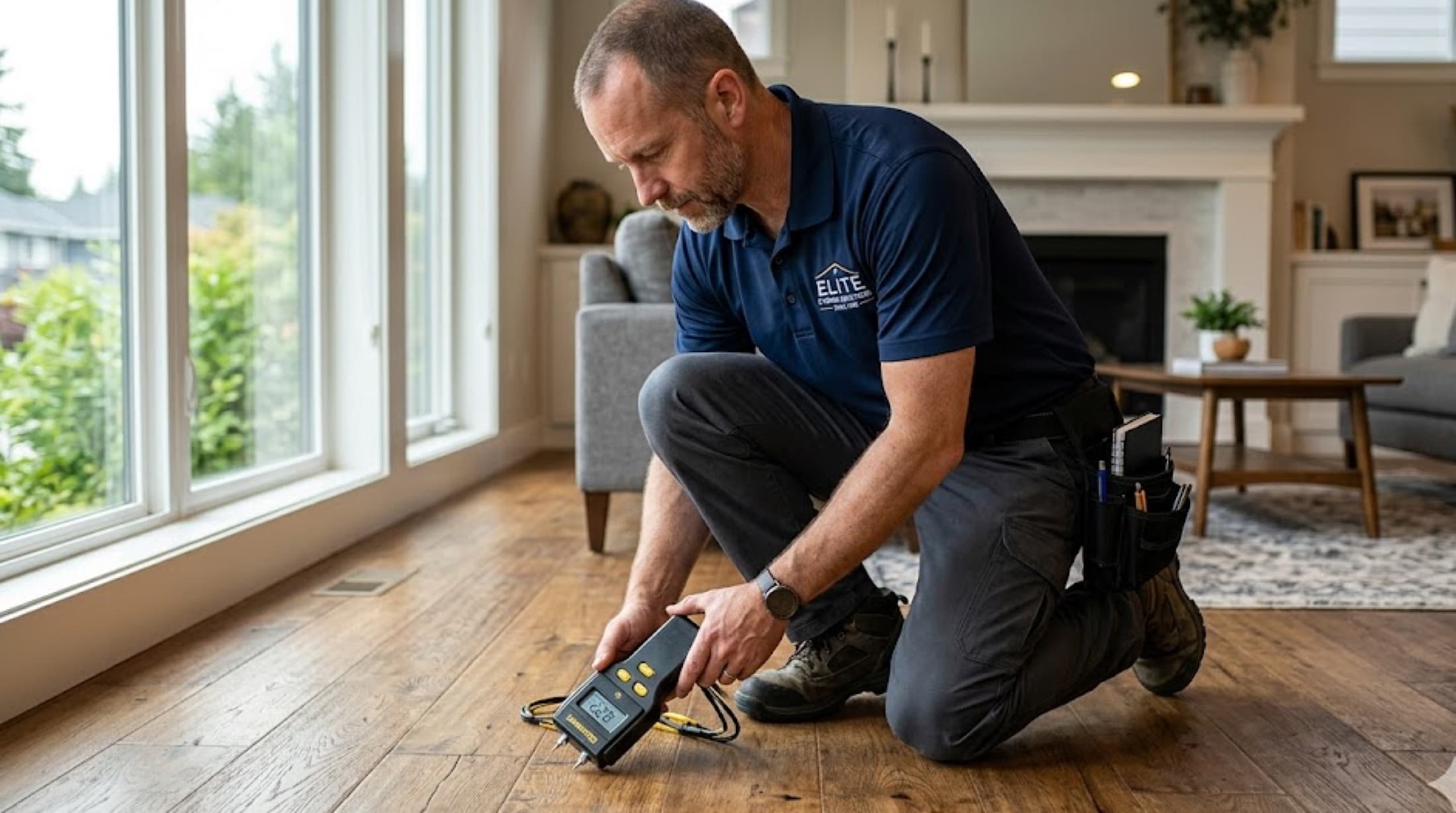
NWFA-Certified inspection of cupping, crowning, gapping, finish failure, and installation-related defects. Moisture readings at species-appropriate equilibrium thresholds.
- NWFA
- IICRC
For insurance carriers · Residential claims
NWFA-, IICRC-, CFI-, and NALFA-credentialed inspectors handle hardwood, laminate, LVT, carpet, and tile claims in all 50 US states. Reports built to hold against the insured’s contractor, panel-counsel review, and procurement audit.
The contested residential claim
When a homeowner files a flooring claim and the contractor disagrees with the carrier’s call, the dispute usually traces back to one of a handful of well-known modes. The job of the inspector is not to take a side — it is to document the failure mode against a published taxonomy and let the evidence stand for itself.
Post-leak hardwood cupping, laminate swelling, LVT delamination, carpet pad saturation. Moisture readings and substrate documentation are the load-bearing evidence.
Improper expansion gaps, missing moisture barriers, off-spec adhesives, subfloor flatness out of tolerance. Failure-mode taxonomy distinguishes installer error from product defect.
Urine staining through finish to wear layer, scratched boards, claw-driven seam failures. Documented at the board level with photographic evidence and dye-penetration notes.
Buckling and cupping that emerge weeks after the original water event. Hidden subfloor moisture is the usual root cause; the report names it instead of guessing.
What we inspect
Each product category is matched to the certification that covers its failure modes. The inspector is not a generalist with a flooring sub-specialty — the cert names the trade competence.
NWFA-Certified inspection of cupping, crowning, gapping, finish failure, and installation-related defects. Moisture readings at species-appropriate equilibrium thresholds.
NALFA-credentialed inspection of swelling, peaking, delamination, and seam failure. Substrate moisture and locking-system integrity documented.
Inspection of telegraphing, gapping, lifting, gloss-loss, and adhesive failure against manufacturer install specifications and substrate flatness tolerances.
IICRC-Certified inspection of pad saturation, delamination, seam failure, browning, wicking, and installation-related defects. Moisture readings under the pad.
Inspection of cracking, hollow tile, lippage, grout failure, and substrate movement. Crack-isolation membrane presence and substrate prep evaluated.
The report
Every residential claims report carries the same anatomy — methodology disclosed, photographic evidence captioned against a failure-mode taxonomy, moisture readings at species-appropriate thresholds, chain-of-custody preserved, expert qualifications named in the footer. Built so the panel-counsel review, the insured’s contractor, and the procurement auditor are all reading the same evidence.
The engagement
Four steps. Adjuster opens the assignment; the report comes back through the platform.
An adjuster files the assignment through the 24/7 platform; coverage operations confirms inspector availability against your SLA before the assignment is accepted.
A credentialed inspector visits the home, documents the failure mode against the published taxonomy, and captures evidence with chain-of-custody preserved.
Methodology disclosed, photographic evidence captioned, moisture readings recorded, expert qualifications named — delivered through the platform in formats your claims ticket already accepts.
When the contested claim escalates, the inspector and the report stand behind their work — peer-review-audited and dispute-ready for panel counsel.
Certified for the failure mode
Forensic-engineering generalists hold engineering licenses; the failure mode on a residential floor is trade-installation, not structural. Our inspectors carry the certifications that govern the product categories carriers route to us.
NWFA
The trade body for hardwood. Names the methodology for solid and engineered wood failure analysis.
IICRC
Standards body for water damage, carpet, tile, and substrate inspection. The carrier-side credential most-recognized by panel counsel.
CFI
Installation-trade body. Distinguishes installer error from product defect — the load-bearing call on most contested claims.
NALFA
Laminate-specific trade body. Names the spec the manufacturer’s warranty itself cites.
Carrier questions, answered
Coverage operations confirms inspector availability against your SLA before the assignment is accepted. Standard residential turnaround in markets with established roster depth is measured in days from assignment to report; remote-market assignments are confirmed individually with a stated date so adjusters never wait on an undefined timeline. SLA terms are negotiated case-by-case during vendor onboarding.
The report classifies the failure mode against the published taxonomy — installation defect, product defect, post-installation event, or moisture-driven failure — using the certification governing the product category. The report does not adjudicate warranty coverage; that decision belongs to the manufacturer. What the report provides is the evidence basis on which the warranty conversation can proceed without ambiguity.
Yes. The report’s assignment field names whoever the carrier directs — the carrier itself, the insured, the claimant, or a panel-counsel firm. The findings, methodology, and evidence remain identical regardless of the addressee; only the cover language changes. This avoids the chain-of-custody concerns that arise when a single report is forwarded between parties.
The report documents the failure mode and the affected scope; it does not estimate repair costs or specify replacement materials. That separation is deliberate — adjusters and contractors handle the cost estimate inside the carrier’s existing pricing tools. The report’s job is the evidence of what failed and why, not the negotiation of what it costs to fix.
Open a residential assignment
Open a residential inspection assignment through the 24/7 platform, or download a redacted sample report first — no procurement diligence required for the download.